
Born in 1916 Mick came as a puppy from Leicestershire to his master when he was training as an air pilot at Northolt Aerodrome.
Mick loved Edgar Roberts, his master, and was gentle and loving to all mankind. He flew with Edgar and was always his companion, except when Edgar went abroad to fight in the war.
Schooling
Royal Flying Corps, Northolt Aerodrome
7th June 1919
Demobilized at end of the war. Returned to civilian life as Pest Control Officer (specialising in rats) at Ivy Farm
Mick loved sport, flying, large black pigs & rats!

Mick’s best friend – The Mersea Smuggler.
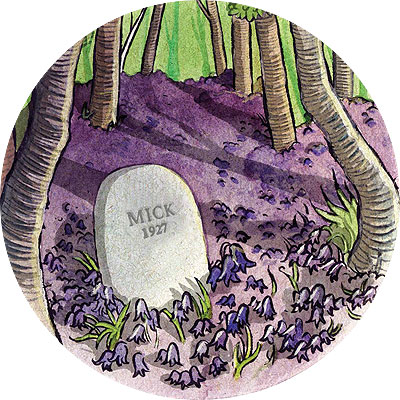
Mick died in 1927 and was buried in the bluebell wood on the cliffs at Cudmore Grove.
Animals at War
Horses, mules and donkeys
Around eight million horses and countless mules and donkeys died in the First World War. They were used to transport ammunition and supplies to the front and many died, not only from the horrors of the battlefield, but also because of terrible weather and appalling conditions.
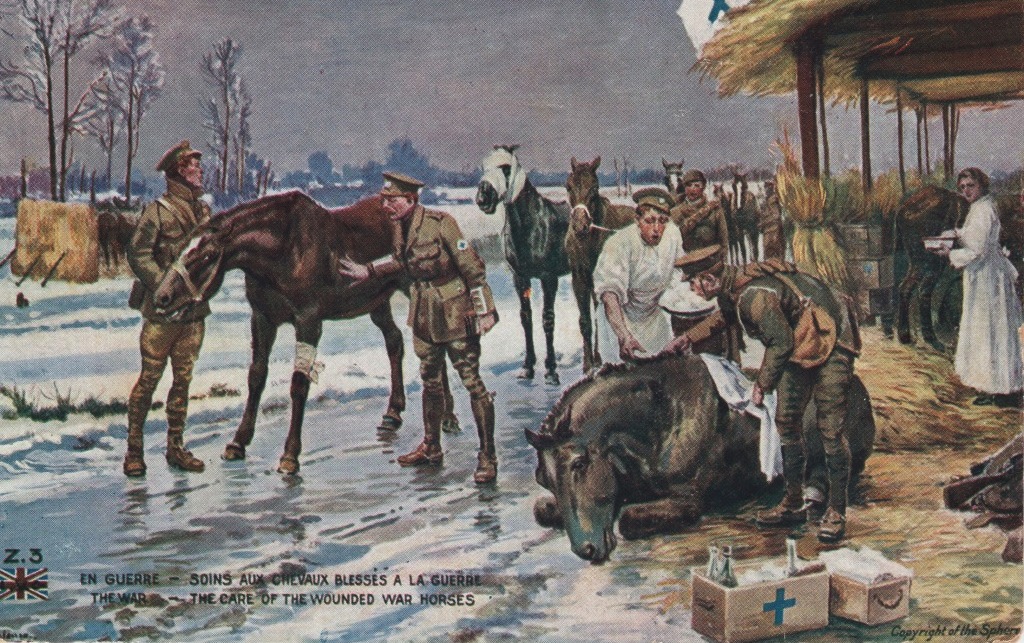
ORIGINAL FRENCH POSTCARD SENT FROM 6TH BATTALION TUESDAY 28TH DECEMBER 1915
Pigeons of War: The Use of Feathered Messengers.
Around 100,000 pigeons served Britain in the First World War, carrying vital messages across dangerous territory.
Flying at the rate of a mile a minute from the front line, from behind enemy lines or from ships or aeroplanes, these gallant birds would fly on through all weathers, even when severely wounded and exhausted. On several occasions pigeons successfully brought messages in from an area being subjected to gas attacks as they were able to fly above the gas.
Other animals
Elephants, camels, oxen, bullocks, cats, canaries, even glow worms served.